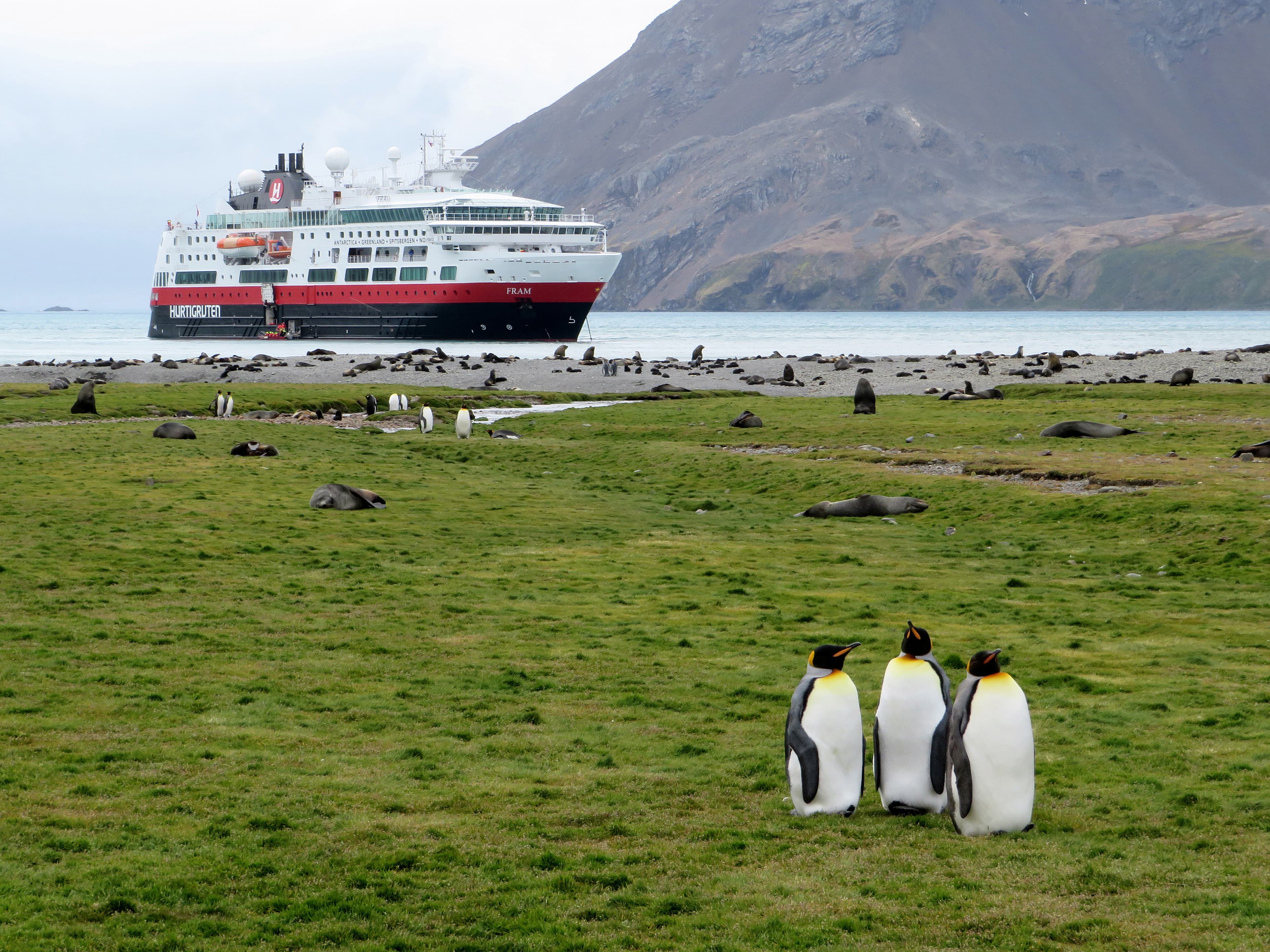
The best first Antarctica voyage is rarely the longest or the most expensive. It is the one that matches your tolerance for sea days, your wildlife priorities, and the comfort level you expect between landings.
Start with the way you travel
Antarctica is a continent of weather, not a fixed itinerary. The most useful first question is not which ship or which month — it is how you handle uncertainty. The traveller who plans every meal in advance will be tested by the Drake Passage. The traveller who wakes early, drinks the coffee, and stays curious will be rewarded.
Before we shortlist anything, we ask three things: how long can you give the journey, what kind of mornings do you want at sea, and what would make the trip a quiet personal landmark. Those answers narrow the field faster than any brochure.
Classic Peninsula is still the strongest opening
For most first-time travellers, an eleven to twelve-day Peninsula voyage gives the fullest picture of Antarctica in the smallest commitment of time. You see ice in every form — glaciers, tabular bergs, brash, fast ice — and three to five penguin species in numbers that change the rest of your photography library.
The ships that excel here are mid-sized expedition vessels: 120 to 200 guests, low decks, fast zodiacs, and an expedition team large enough to run two simultaneous landings. Anything bigger and your landing time per day shrinks. Anything smaller and you trade comfort for capability.
Fly-cruise: pay for the time, not the convenience
Fly-cruise programs charter aircraft over the Drake Passage and place you straight into the South Shetlands. They suit travellers with eight to ten days and a strong dislike of open-ocean crossings. The premium is real — usually thirty to fifty percent above an equivalent classic voyage — but the days you do spend in Antarctica are dense and high-yield.
What you give up is texture. The slow approach across the Drake, the seabirds, the briefings, the gradual recalibration to a wilder time signature: these are not filler. For some travellers they are the trip. Be honest with yourself about which you would miss.
Season matters more than people expect
November and early December reward the photographers and the romantics. Snow is still clean, ice is sculptural, courtship displays are at peak, and the Peninsula feels like a place very few people have ever seen. Landings can be slightly slower as ice opens up. Whales are present but not yet abundant.
January and February are the classic family-and-first-timer months. Temperatures are gentler, chicks are visible, landing windows are generous, and ship operations run at full tempo. The trade is that the Peninsula is at its busiest, though 'busy' in Antarctica still means meeting another ship every other day or so.
Late February into March is the connoisseur's window. Light goes long and golden, whales feed in the channels, and the season takes on a quieter dignity. You give up some snow purity in exchange for the most photogenic conditions of the year.
Cabin choice: think about the morning after the rough night
The cabin you book shapes how rested you arrive at every landing. On a rough Drake night, an upper-deck suite at the bow will move significantly more than a mid-ship cabin two decks lower. The price difference between the two can be ten to twenty thousand dollars, and the recovery difference can be the entire trip.
Our default counsel: prioritise location and bed type over square footage. A standard mid-ship cabin with a real bed and a window beats a higher-category outside cabin near the bow or stern for almost every traveller. Save the suite for second or third voyages, when you know how your body handles the Drake.
What we will tell you to skip
Some upgrades sound exciting and quietly disappoint. Camping nights on the ice are a powerful idea, but on most ships only a fraction of guests are accommodated and weather frequently cancels them. Submarine excursions are extraordinary and rare; on a standard departure most guests will not get one.
If a particular extra is the trip-maker for you, tell us upfront. We will recommend a ship and departure that operates it reliably, rather than booking you onto a voyage where it lives in the brochure and almost never in practice.
When in doubt, go now
Travellers often wait for the right year, the next promotion at work, the kids old enough to remember it. Antarctica rewards earlier rather than later. Your knees and your wonder both depreciate over time. The voyage you take in your fifties is not the same as the one you take in your seventies, even on the same ship.
Begin a conversation when you have a window of two to three weeks somewhere in the next eighteen months. We will tell you honestly whether to book now or wait — and if we recommend waiting, we will say why.
Working through these decisions?
Ask us your shortlist.